


Dear Clients and Partners,
As we move toward a new era of economic integration and labor market formalization, Vietnam is preparing to implement one of the most comprehensive legal shifts in its modern history. The Law on Employment 2025, which officially takes effect on January 1, 2026, represents a pivotal turning point for every business operating within our borders.
For foreign-invested enterprises (FIEs) and local corporations alike, staying ahead of these changes is not merely a matter of legal compliance: it is a strategic necessity. The 2026 regulatory landscape emphasizes greater protection for workers, stricter definitions of employment relationships, and expanded social safety nets. At BLaw Vietnam, we believe that transparency and preparation are the keys to a thriving business.
This guide provides a deep dive into the critical updates you need to navigate to ensure your business remains compliant, efficient, and competitive in 2026.
1. A New Era for Unemployment Insurance (UI)
Perhaps the most significant change introduced by the 2025 Law is the massive expansion of the Unemployment Insurance (UI) framework. Historically, many short-term or part-time workers fell through the cracks of the social security system. From 2026, those cracks are being sealed.
Expanded Coverage for Short-Term Contracts
Under the previous regulations, employees on contracts of less than three months were often exempt from UI contributions. Starting January 1, 2026, all employees with contracts of one month or more must participate in the UI scheme. This includes:
- Temporary workers and seasonal staff.
- Part-time employees whose monthly salary meets the minimum threshold for social insurance contributions.
- Individuals working under various titles who are effectively in a paid employment relationship.
Updated Benefit Caps and Eligibility
The law also introduces a new structure for benefits to ensure they remain relevant to the rising cost of living. The maximum unemployment benefit is now capped at five times the regional minimum wage. Furthermore, for those on short-term contracts (1–12 months), the eligibility criteria have been relaxed: workers now only need to have contributed for 12 months within the 36 months prior to termination, rather than a rigid 24-month window.
Through these changes, the government aims to create a more resilient workforce, but for employers, it means a higher administrative burden and the need for more precise payroll tracking.

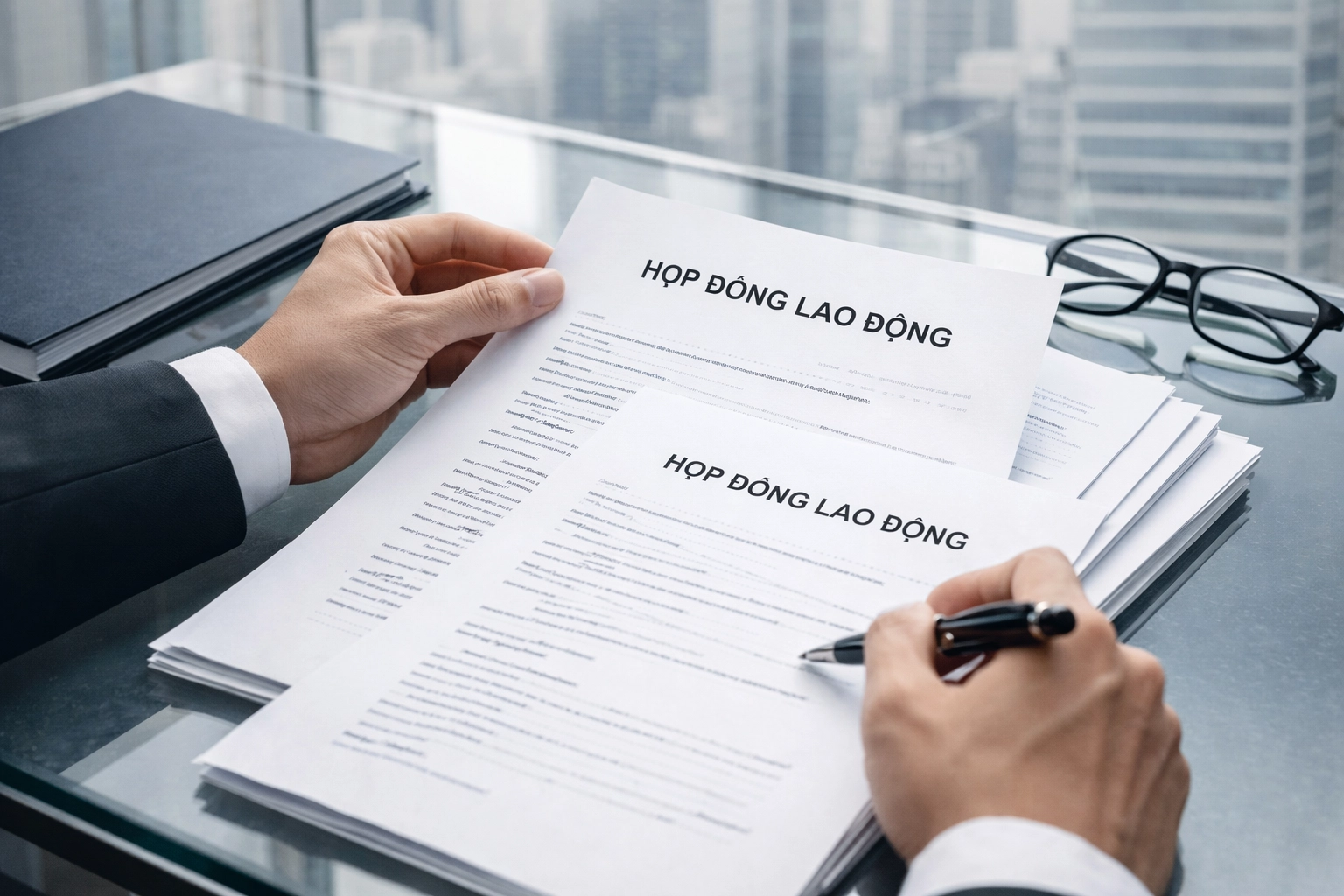
2. Stricter Labor Contract Classification
For years, some businesses in Vietnam utilized "consultancy agreements" or "service contracts" to engage workers while avoiding the heavy costs associated with social insurance and strict labor protections. The 2026 legal framework effectively ends this ambiguity.
The Substance-Over-Form Principle
Labor authorities are shifting toward a "substance-over-form" approach. If a contract involves a specific job description, a salary, and the management or supervision of one party over another, it is legally classified as a labor contract, regardless of what the document is titled.
Key restrictions to keep in mind:
- Fixed-Term Limits: Definite-term contracts cannot exceed 36 months.
- Renewal Constraints: You can only renew a fixed-term contract once. Upon the third signing, the contract automatically converts into an indefinite-term contract.
- Misclassification Risks: Misclassifying employees can lead to significant penalties, including retroactive social insurance payments and potential litigation.
To mitigate these risks, many of our clients are reviewing their corporate governance structures to ensure every "contractor" meets the strict legal definition of an independent service provider.
3. Navigating Termination and Severance in 2026
Vietnam remains a pro-employee jurisdiction. In 2026, the procedural requirements for terminating an employee will be scrutinized more than ever. Even if an employer has a valid economic or disciplinary reason for termination, a single procedural error: such as a missed notice period or an improperly formatted termination letter: can result in a court ruling the termination "wrongful."
Compliance Requirements
- Legal Grounds: You must have clear, documented evidence for termination (e.g., performance reviews, disciplinary records, or proof of organizational restructuring).
- Notice Periods: Adhering to the statutory 30-day notice for definite contracts and 45-day notice for indefinite contracts remains mandatory.
- Severance Calculations: Accuracy in calculating severance pay is vital. Errors here are a common trigger for labor disputes.
If your business is undergoing a merger or acquisition, the complexity increases significantly. Our M&A services often focus heavily on labor due diligence to ensure that the transition of employees does not create hidden liabilities for the buyer.
4. Foreign Workers and the Impact of Decree 219
For our international partners, the rules regarding foreign labor are evolving alongside the general employment law. Decree 219/2025/ND-CP, which integrates into the 2026 landscape, introduces tighter controls over work permit exemptions and renewals.
Key Changes for Expats:
- Work Permit Necessity: The list of "experts" and "technical workers" is being refined to ensure only highly qualified individuals receive permits.
- Bilingual Documentation: All HR files for foreign employees must be maintained in Vietnamese, or at a minimum, be bilingual.
- Compliance Audits: Expect more frequent inspections from the Department of Labor, Invalids and Social Affairs (DOLISA) regarding the ratio of foreign to local workers.
Navigating these licensing requirements is essential for maintaining your operational stability in Vietnam.

5. Mandatory Obligations for New and Existing Entities
If you are planning to start your FDI business in Vietnam, or if you are scaling up your current operations, there are several mandatory administrative steps that cannot be overlooked in 2026:
- Social Insurance Code Registration: This must be completed immediately upon hiring your first employee.
- Collective Labour Agreement (CLA): If your business employs more than 10 people, a CLA is highly recommended and often requested by authorities to ensure industrial harmony.
- Internal Labour Regulations (ILR): These must be registered with the local labor department. Without a registered ILR, taking disciplinary action against an employee is legally impossible.
- Trade Union Contributions: Even if your company does not have a formal trade union, you are still required to pay trade union fees (usually 2% of the salary fund used for social insurance).
6. Your 2026 Compliance Checklist
To ensure your business is ready for the January 1 deadline, we recommend the following action plan:
- [ ] Audit Existing Contracts: Identify any "consultants" who might be reclassified as employees under the new law.
- [ ] Review UI Contributions: Update your payroll system to include UI for employees on 1-3 month contracts.
- [ ] Update Internal Labour Regulations: Ensure your ILR reflects the 2026 changes regarding working hours, rest breaks, and disciplinary procedures.
- [ ] Conduct Labor Law Training: Ensure your HR department and department heads understand the stricter rules regarding termination and notice periods.
- [ ] Re-evaluate Employment Models: Consider if an Employer of Record (EOR) model or a direct hiring model best suits your tax optimization and risk management goals.

Why Expert Legal Support is Non-Negotiable
The transition to the 2026 Employment Law is complex. The interplay between labor law, taxation, and corporate compliance requires a holistic approach. At BLaw Vietnam, we pride ourselves on being a highly qualified partner that helps you streamline these transitions, ensuring your business remains efficient and legally sound.
Our team has a proven track record of helping foreign investors navigate the specific nuances of the Vietnamese market. Whether you need a comprehensive labor audit or assistance with labor law services, we are here to provide actionable, logical, and expert guidance.
Closing Thoughts
In addition to the operational challenges, these changes represent an opportunity to enhance your corporate culture by providing better security for your team. A compliant business is a stable business, and a stable business is a successful one.
Through the above guide, we hope you feel more empowered to face the upcoming changes. However, we understand that every business has unique challenges.
Are you ready for 2026? Don't wait until the new year to discover a compliance gap. We invite you to reach out to our team today for a consultative review of your employment practices. Let’s work together to ensure your business continues to thrive in Vietnam’s evolving legal landscape.
Contact BLaw Vietnam today via our directory or visit our homepage to learn more about our services.
Sincerely,
The BLaw Vietnam Team